
Steven Wolff: “It was a champagne championship”
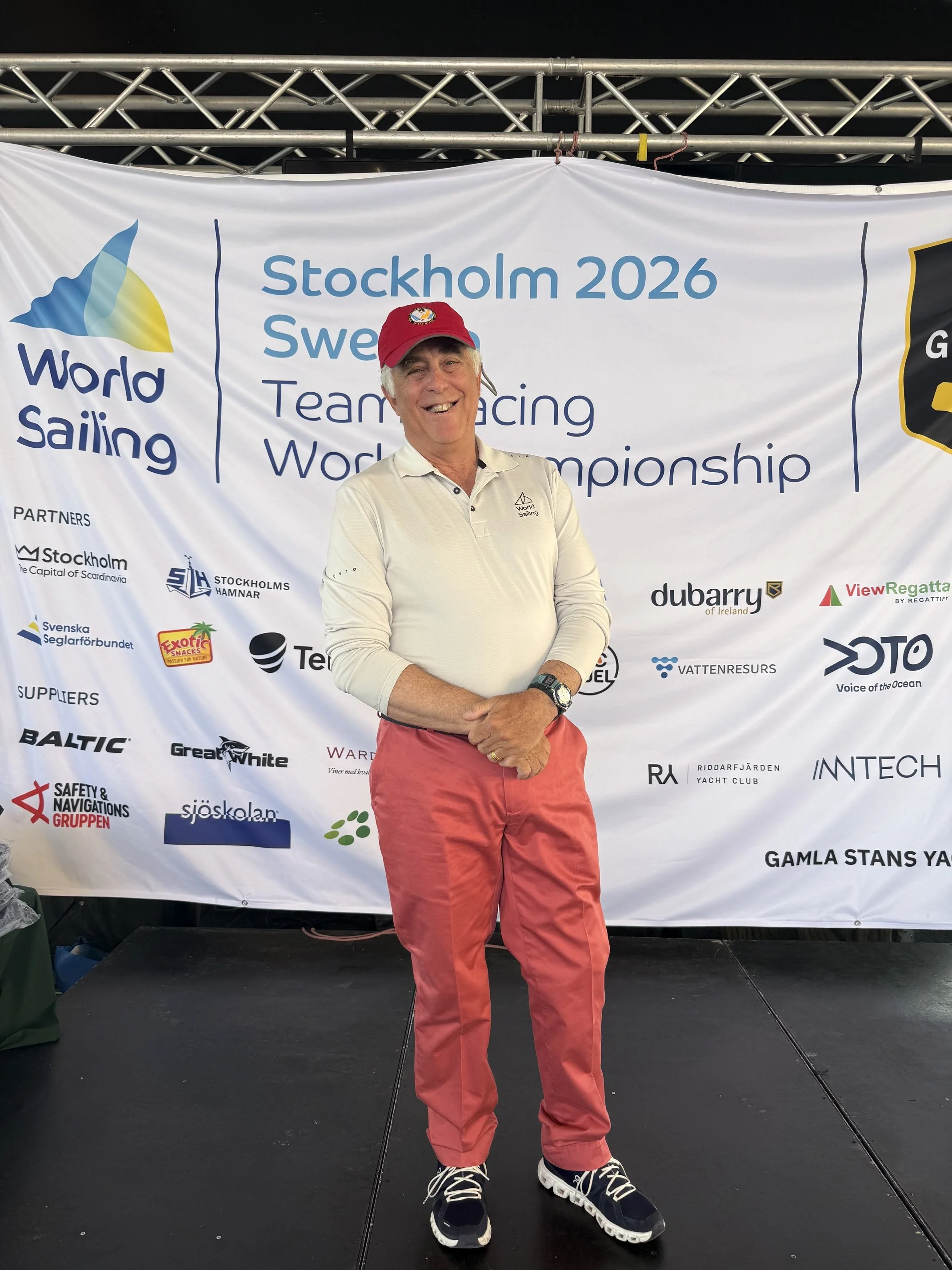
The Team Racing World Championship in Stockholm has come to an end after four days of intense racing, 148 races and a new world champion. For World Sailing, the championship delivered far more than could have been hoped for.
“It’s been a champagne championship,” says the World Sailing technical delegate Steven Wolff.
“The conditions were amazing, the venue is amazing, the city is amazing, the volunteers are amazing. We got 148 races in and we picked a world champion. What more could we ask for?”
For him, one of the strongest memories will not be a particular race or result, but the people behind the event.
“What I’ll remember most is all of the volunteers, all of the club members. So many people, so involved, doing work still on the dock. I think it’s a real testament to the culture of team racing that so many people wanted to help.”
The location also made a difference. With the racing taking place on Riddarfjärden, right in the heart of Stockholm, the championship was visible to the city in a way that few sailing events are.
“Being on the city front, having people cheering, that’s just wonderful.”
Could team racing become an Olympic sport?
The success in Stockholm also comes at an interesting time for team racing, which World Sailing hopes can eventually find its way into the Olympic programme.
“We’re certainly hopeful in the team racing world that we can find a way to get into the Olympics,” he says.
The format could offer an opportunity for athletes already competing at the Games to compete for another medal. But exactly how team racing could fit into the Olympic programme remains an open question.
“There are a lot of challenges. How many athletes there are, how television-friendly it is, how evolutionary it is.”
A test event at last year's Youth Worlds, using two single-handed Lasers against two single-handed Lasers, offered one possible direction. But after seeing team racing unfold in the centre of Stockholm, the World Sailing representative is convinced the discipline has something special to offer.
“You couldn’t have asked for anything more. It was phenomenal.”
A format made for more countries
The Stockholm championship also marks a new chapter for team racing after a gap of around a decade between World Championships.
According to World Sailing, several factors contributed to the renewed momentum. The UK and US have traditionally had a strong advantage because team racing is deeply embedded in school and university sailing. For other nations, the discipline has been more difficult to develop because it requires significant resources.
One major change has been the move towards two-versus-two racing, rather than three-versus-three or four-versus-four.
“It’s a third less people. It’s easier to organise, there are fewer boats. It’s also a little more exciting. We changed the rules to make it more exciting.”
The simpler format has also helped make team racing more accessible internationally, while adult sailors have increasingly embraced the discipline alongside its strong youth tradition.
And that international growth is crucial.
“World Sailing really wants to see 10 or more countries competing for a World Championship. That was able to happen last year and this year.”
In Stockholm, 12 nations lined up on the start line.
After four days, 148 races and countless close tactical battles, the championship has not only crowned a world champion, USA 1, it may also have demonstrated why team racing deserves a much bigger stage.