
Restored Riddarfjärden shines at Worlds arena
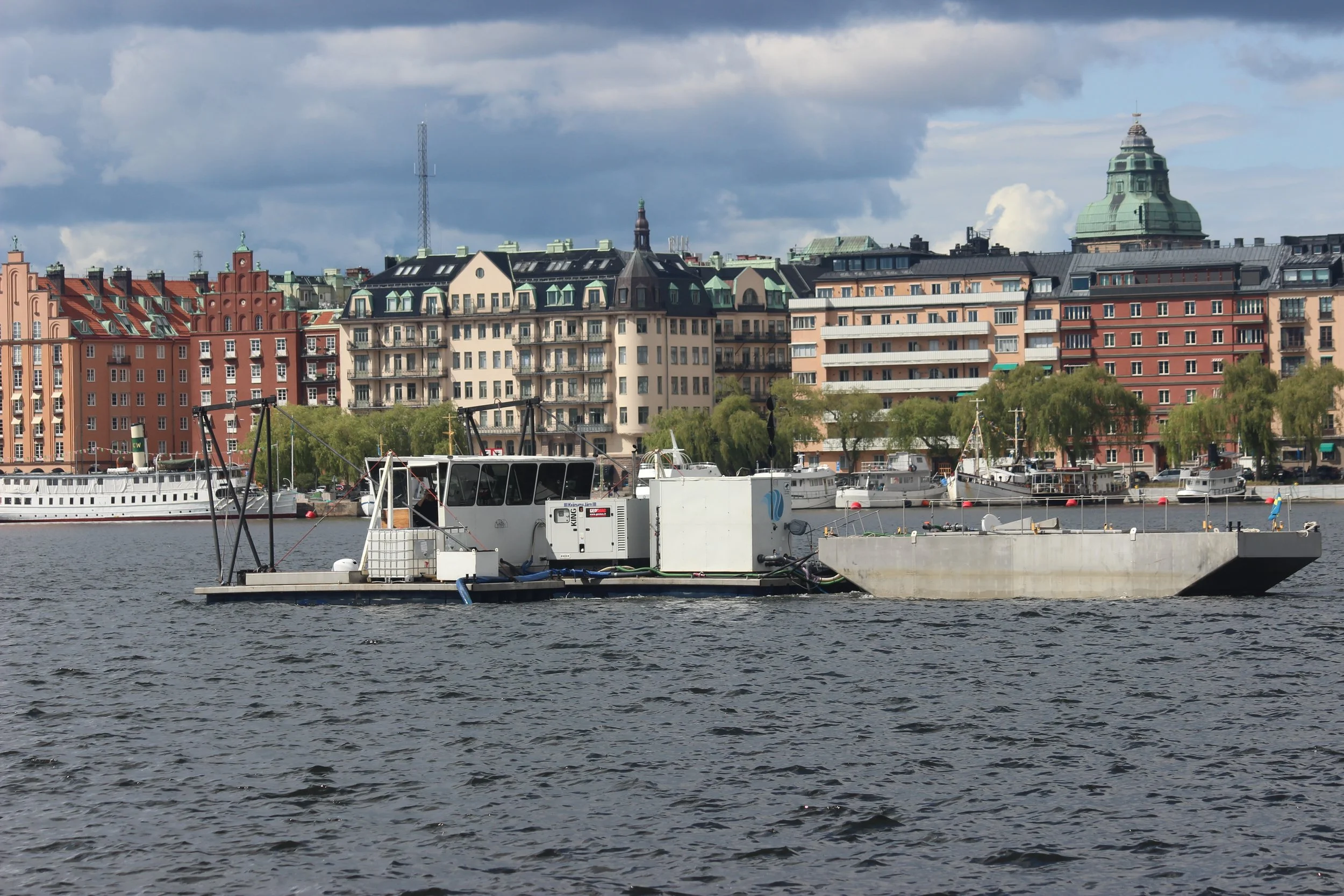
Lakes and inland bays can be saved – and it’s being done. Today, even more eutrophic waters are restored with Stockholm’s municipalities.
During this summer’s phosphorous precipitation in Riddarfjärden, 20 unwanted tons of phosphorous are removed. The once burdened bay is now gathering the world’s sailing elite, on the doorstep of the City Hall.
Stockholm city has for decades invested significant resources in water care, including through phosphorous precipitation. This binds phosphorous, which is responsible for algal blooms and anoxia. Recently, the municipality has restored seven lakes with phosphorous precipitation, and this summer both Ulvsundasjön and Riddarfjärden undergo treatments. Riddarfjärden, a bay of the lake Mälaren, was once called Lortfjärden (the filthy bay), a history hard to believe for today’s World Championship sailors.
For many participants, it is almost surreal to sail a World Championship with such a strong environmental profile in the heart of a capital city, emphasizes Magnus Myrenberg, competition leader and Vice President of the World Championship hosting organization GSYS, Gamla Stans Yacht Sällskap.
Since the late 1990’s, Stockholm County has implemented around 30 treatments with phosphorous precipitation to save eutrophic lakes and inland bays. Often, the effect is easy to see and measure. The strong currents in Riddarfjärden makes measurements difficult but it is clear that the efforts have minimized the amounts of phosphorous in the bay and further downstream in the archipelago.
The method is especially effective for old environmental sins, such as earlier releases of nutrients, which otherwise continue to cause large injuries. Then there must also be additional measures to minimize ongoing release, says Fred Erlandsson, limnologist at SVOA, Stockholm Water and Waste, who in collaboration with the Environment Administration of the City of Stockholm is responsible for the efforts.
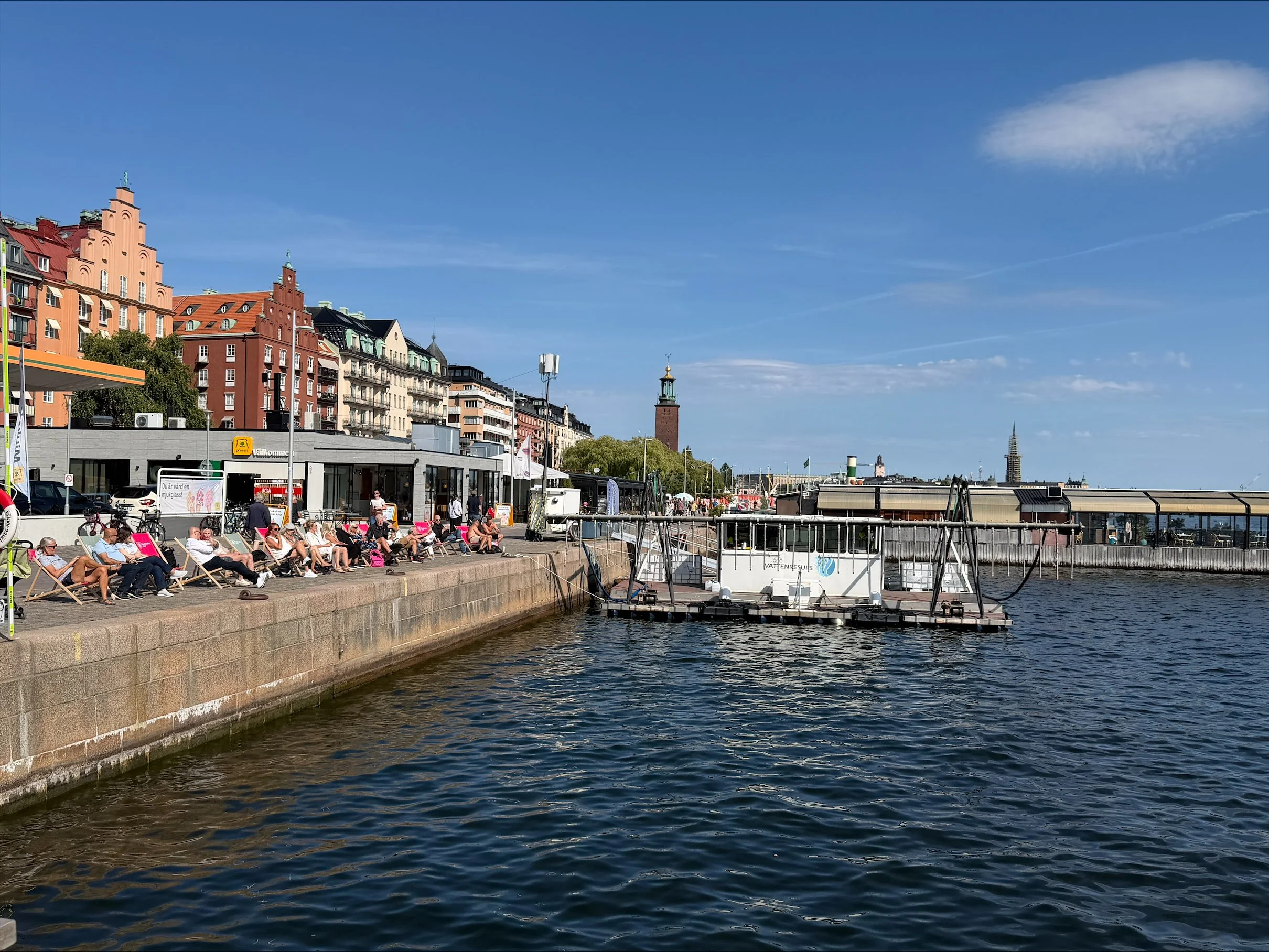
This summer’s treatment is performed by Vattenresurs, who started at a small scale over 30 years ago. The technology builds upon a Swedish, proven and patented method. From 2020, the business has taken off and the company has bound over 200 tons of phosphorous in eutrophic waters.
About phosphorous precipitation against eutrophication
The method is without harm, effective, and lasting as long as larger releases of phosphorous are contained after the treatment. Link to SU study on Björnöfjärden
In just Stockholm County, Norrtälje, Nacka, Huddinge, Södertälje, Sollentuna, Lidingö, Sundbyberg, Tyresö and Solna municipalities are working with phosphorous precipitation. Borlänge, Hedemora and Växjö municipalities are examples in other counties that also bind phosphorous through phosphorous precipitation.
The treatment uses the same product as drinking water purification in treatment plants.